
 By admin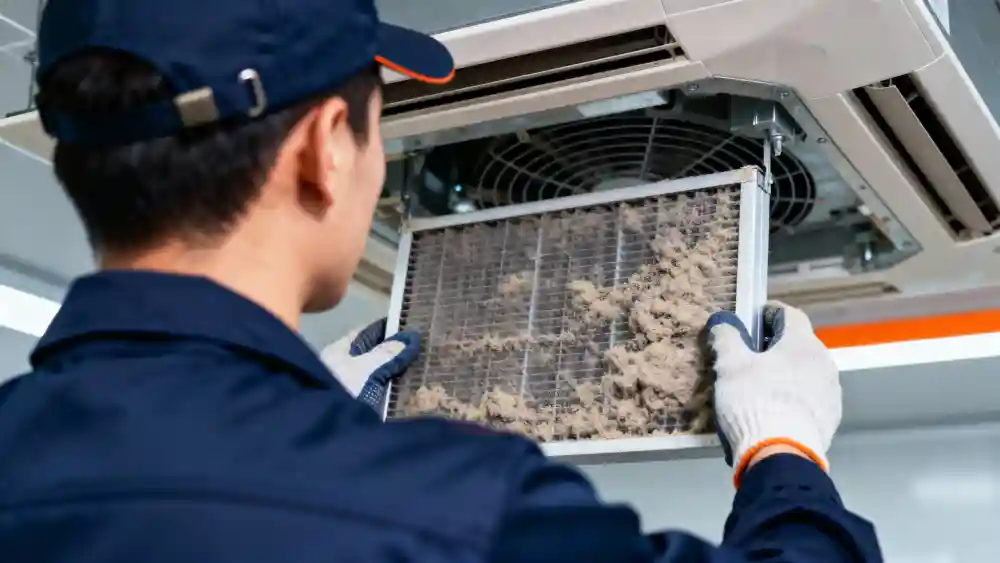
To clean AC ducts, switch off the air conditioning system, remove and wash the vent covers, vacuum visible dust inside the ducts with a long hose attachment, wipe accessible surfaces, clean or replace the air filter, and remove debris around return vents. For heavy dust, mould, pests, or deeply contaminated ductwork, professional duct cleaning is the safer and more effective option.
Air conditioning ducts quietly do one of the hardest jobs in a property. They move conditioned air from the AC system into different rooms, often for hours every day, while remaining hidden above ceilings, behind walls, or inside service spaces.
Because they are out of sight, they are also easy to forget.
Over time, dust, fibres, pet hair, construction debris, pollen and other contaminants can settle around vents and inside accessible sections of ductwork. In some cases, moisture problems can also encourage unpleasant smells or microbial growth.
This naturally raises an important question: how do you clean AC ducts properly?
Basic duct cleaning can be carried out at home if the contamination is light and limited to accessible areas. However, proper deep duct cleaning is more involved than simply pushing a vacuum hose into a vent. Duct systems can contain long runs, branch sections, dampers, insulation, bends and hidden areas that ordinary household equipment cannot reach.
The key is knowing what you can safely clean yourself, what should be left alone and when professional intervention makes more sense.
What Are AC Ducts?
AC ducts are channels that distribute conditioned air throughout a building.
Depending on the type of air conditioning system, ductwork may supply cooled air to bedrooms, living rooms, offices and other indoor spaces.
A typical ducted AC system contains several important components, including:
- Supply ducts
- Return ducts
- Supply vents
- Return grilles
- Air filters
- Dampers
- Insulated duct sections
- Flexible or rigid duct runs
- Air handling equipment
Supply ducts deliver conditioned air into rooms.
Return ducts pull indoor air back towards the AC unit so it can be filtered, cooled and circulated again.
Because the same air is repeatedly moving through the system, keeping filters and accessible duct surfaces clean can support better airflow and general system hygiene.
Why Do AC Ducts Get Dirty?
Air ducts do not create dust themselves.
Instead, they collect particles carried by indoor air.
Everyday activities contribute to airborne dust, including:
- Walking across carpets
- Opening doors and windows
- Cooking
- Cleaning
- Using fabric furniture
- Keeping pets indoors
- Construction or renovation work
- Running ceiling fans
- Moving boxes and stored items
A good AC filter captures many airborne particles before they enter deeper into the system.
However, no filter captures everything.
If the filter is dirty, badly fitted or missing, more dust can enter the duct network.
Small air leaks around duct joints can also pull dust from ceiling voids and service spaces into the system.
How Often Should AC Ducts Be Cleaned?
There is no fixed rule requiring every duct system to be deeply cleaned at the same interval.
Some homes may require very little internal duct cleaning for years, particularly when they use good filtration and receive regular AC maintenance.
Others may need attention sooner.
You should consider inspecting or cleaning ducts if you notice:
- Visible dust blowing from vents
- Thick dust around supply grilles
- Persistent stale or musty odours
- Debris inside visible duct openings
- Reduced airflow
- Evidence of pest activity
- Water damage near ducts
- Suspected mould growth
- Heavy dust after building work
- Long periods without AC maintenance
Routine vent and filter cleaning should be carried out much more frequently than full duct cleaning.
How to Clean AC Ducts Step by Step
Cleaning accessible duct areas is manageable with basic household tools.
Before starting, remember that you are working around an electrical and mechanical system.
Always switch off the AC before removing vent covers or placing tools near duct openings.
Step 1: Switch Off the Air Conditioning System
Turn off the AC before beginning.
Use the normal system controls and, if appropriate, isolate the system according to the manufacturer’s instructions.
You do not want the blower suddenly starting while vent covers are removed.
Switching the system off also prevents loosened dust from being blown around the property during cleaning.
Step 2: Prepare Your Cleaning Equipment
For light domestic duct cleaning, you may need:
- Vacuum cleaner with a long hose
- Soft brush attachment
- Microfibre cloths
- Mild detergent
- Bucket of warm water
- Screwdriver
- Dust mask
- Gloves
- Small torch
- Soft cleaning brush
Avoid using harsh chemicals inside the ducts unless they are specifically approved for your system.
Strong chemical products can damage duct materials, coatings or insulation and may leave unwanted fumes behind.
Step 3: Remove the Vent Covers
Carefully unscrew supply vents and return grilles.
Some covers may simply lift or clip off, while others are fixed with screws.
Place any screws somewhere safe.
As you remove each grille, inspect the area behind it.
A thin layer of dust is fairly normal.
Large deposits, damp staining, unusual growth or pest debris may indicate a more serious issue.
Step 4: Clean the Vent Covers
Vent covers themselves can collect a surprising amount of dust.
Use a vacuum cleaner first to remove loose debris.
If the material allows, wash the covers with warm water and a small amount of mild detergent.
Use a soft brush to clean between the slats.
Rinse them and allow them to dry completely before reinstalling them.
Do not put wet grilles back onto the duct openings because added moisture can create further problems.
Step 5: Vacuum Inside Accessible Duct Sections
Attach the longest suitable hose to your vacuum cleaner.
Carefully insert it into the accessible duct opening and vacuum loose dust and debris.
Use a soft brush attachment where possible.
Do not aggressively push the hose deep into flexible ductwork.
Flexible ducts can be damaged, crushed or torn if treated roughly.
Focus on the areas you can safely and clearly reach.
If you cannot access deeper sections without force, stop there.
Step 6: Loosen Dust Around the Duct Opening
A soft brush can help loosen dust attached to the first section of ductwork.
Brush gently while holding the vacuum nearby.
This works particularly well around metal duct openings and the internal edges behind vent covers.
Avoid scraping or puncturing internal duct insulation.
Some duct systems contain delicate lined surfaces that can be damaged by stiff brushes.
Step 7: Wipe Accessible Surfaces
Use a slightly damp microfibre cloth to wipe surfaces immediately inside the vent opening.
The cloth should be damp rather than wet.
Excess water should never be introduced into AC ducts.
Moisture can become trapped inside the duct system and encourage unwanted microbial growth.
Once the surface is clean, allow it to dry before replacing the grille.
Step 8: Clean the Return Air Grilles
Return grilles are particularly important because they pull indoor air back towards the AC system.
They often collect more visible dust than supply vents.
Vacuum the grille thoroughly.
Remove it if possible and clean both sides.
Also vacuum the surrounding frame and accessible return duct area.
If the filter is located behind the return grille, inspect it at the same time.
Step 9: Clean or Replace the AC Filter
Filter maintenance is one of the most effective ways to reduce future duct contamination.
Remove the existing filter and inspect it.
Reusable filters should be cleaned according to the manufacturer’s instructions.
Disposable filters should be replaced when dirty.
Do not wash a disposable filter unless it is specifically designed to be washable.
Installing the correct replacement filter also matters.
A filter that is too small or poorly fitted can allow dust to bypass the filtration system.
Step 10: Check for Moisture
Before closing the vents, look for any sign of water or dampness.
Watch for:
- Wet duct surfaces
- Water stains
- Rust
- Condensation marks
- Damp insulation
- Musty odours
Moisture inside ductwork should not be ignored.
The cause could involve condensation, insulation failure, drainage issues, air leakage or another AC problem.
Cleaning the visible moisture without solving the source is only a temporary fix.
Step 11: Refit the Vent Covers
Once everything is dry, reinstall the grilles and vent covers.
Tighten screws securely without overtightening them.
Make sure every cover is properly aligned.
A loose vent can vibrate or produce unwanted noise when the system is running.
Step 12: Restart the AC
Turn the system back on.
Listen for unusual noises and check the airflow at the cleaned vents.
A small amount of remaining dust may move immediately after cleaning, but persistent debris blowing from vents suggests deeper contamination may still be present.
Can You Deep Clean AC Ducts Yourself?
Only to a limited extent.
Homeowners can usually clean:
- Vent covers
- Return grilles
- Filter areas
- Visible duct openings
- Easily accessible duct surfaces
Deep internal duct cleaning is different.
Professional technicians may use specialist equipment such as:
- High-powered negative-pressure vacuums
- Rotary brush systems
- Compressed-air tools
- Inspection cameras
- HEPA filtration equipment
- Flexible cleaning rods
These tools allow access to larger sections of the duct network without simply spreading dust around the building.
Household vacuum cleaners generally do not have enough suction to clean an entire duct system.
Should You Use a Leaf Blower to Clean AC Ducts?
No.
Using a leaf blower or similar equipment can push dust deeper into the system or spread contamination throughout the home.
It may also damage flexible ductwork.
The same warning applies to using high-pressure air without proper containment.
Professional systems are designed to control the direction in which loosened debris travels.
Randomly blowing air through ducts can turn your HVAC system into a very expensive dust cannon.
How to Clean Flexible AC Ducts
Flexible ducting requires extra care.
Many flexible ducts contain a thin inner lining supported by a wire coil.
Aggressive brushes or hard vacuum attachments can tear this inner lining.
If you have flexible ducts:
- Use gentle vacuuming
- Avoid stiff brushes
- Do not force equipment around bends
- Do not crush the duct
- Avoid sharp tools
- Stop if the lining appears damaged
If significant contamination exists deep inside flexible ducts, professional assessment is generally the safer option.
How to Clean Metal AC Ducts
Rigid metal ductwork can often tolerate more thorough cleaning than flexible ducting.
Accessible sections can be vacuumed and gently brushed.
However, hidden joints, branch connections and internal insulation still require caution.
Do not assume that every visible metallic duct has a completely bare internal surface.
Some metal ducts are internally lined for insulation or noise control.
What About Mould in AC Ducts?
Suspected mould requires more than routine dust cleaning.
Dark marks do not automatically mean mould, but genuine microbial growth should be taken seriously.
If mould appears to be present:
- Do not simply paint over it
- Do not soak ducts with household bleach
- Identify the source of moisture
- Inspect drainage and insulation
- Check for condensation
- Consider professional assessment
Removing visible growth without resolving the moisture problem means it may return.
If contamination is widespread, sections of duct insulation may need replacement rather than cleaning.
Can Dirty AC Ducts Affect Airflow?
Yes, but significant airflow restriction is more commonly caused by other problems.
These may include:
- Dirty air filters
- Blocked evaporator coils
- Closed dampers
- Crushed flexible ducts
- Incorrect duct sizing
- Fan problems
- Poor system balancing
Dust inside ducts can contribute to poor airflow if deposits are severe, but it should not automatically be blamed for every weak vent.
Proper diagnosis matters.
Signs Your AC Ducts Need Professional Cleaning
DIY cleaning is best for light surface dust.
Call a professional if you notice:
Heavy Internal Dust Build-Up
If thick layers of debris are visible deep inside multiple ducts, household tools are unlikely to clean them effectively.
Persistent Musty Smells
A repeated musty smell when the AC runs can indicate moisture or contamination somewhere inside the system.
Visible Mould-Like Growth
Widespread suspicious growth should be inspected properly.
Pest Infestation
Rodents or insects can contaminate duct systems with nesting material and waste.
Cleaning should only take place after the pest problem has been addressed.
Water Damage
Wet duct insulation or repeated condensation may require repair, not simply cleaning.
Recent Construction Work
Renovation can generate huge quantities of plaster dust, sawdust and fine debris.
If the AC was operating during the work, particles may have entered the duct network.
How Much Dust Inside AC Ducts Is Normal?
A small amount of settled dust near vent openings is common.
Air contains tiny particles, and some eventually settle.
The presence of light dust does not automatically mean the entire duct system is dirty or unhealthy.
The problem becomes more important when there are thick deposits, visible debris, odours, moisture or contaminants being blown into rooms.
This distinction can prevent unnecessary cleaning.
Does AC Duct Cleaning Improve Indoor Air Quality?
It can help in certain situations.
Removing significant contamination may reduce the amount of dust or debris circulating through the system.
However, duct cleaning alone cannot solve every indoor air quality issue.
Air quality also depends on:
- Ventilation
- Filtration
- Humidity
- Cleaning habits
- Outdoor pollution
- Pets
- Cooking
- Building materials
- Moisture control
Duct cleaning should therefore be part of a wider maintenance strategy.
Does Cleaning AC Ducts Improve Efficiency?
Cleaning severely contaminated ductwork can support airflow, but the biggest efficiency improvements often come from maintaining the main AC components.
These include:
- Clean filters
- Clean evaporator coils
- Clean condenser coils
- Correct refrigerant charge
- Properly sealed ducts
- Correct thermostat operation
- Good insulation
A slightly dusty duct wall does not necessarily cause major efficiency loss.
A blocked filter, however, can have a significant impact.
How to Keep AC Ducts Cleaner for Longer
Preventing contamination is usually easier than repeatedly cleaning ducts.
Replace or Clean Filters Regularly
A clean filter reduces the amount of airborne dust entering the system.
Seal Duct Leaks
Leaks can draw dust from lofts, ceilings and service areas.
Keep the Property Clean
Regular vacuuming reduces airborne particles.
Control Indoor Humidity
Excess moisture can create conditions for microbial growth.
Keep Return Vents Clear
Do not block return grilles with furniture or curtains.
Maintain the AC System
Regular servicing helps identify airflow, moisture and filtration issues before they become larger problems.
Can You Spray Disinfectant into AC Ducts?
This is generally not recommended as a casual DIY solution.
Spraying household disinfectants into ductwork can introduce chemicals into the airflow and may damage internal materials.
Some products are not designed for use in HVAC systems.
If antimicrobial treatment is genuinely required, it should only be carried out using suitable products and methods.
Cleaning physical debris and fixing the underlying moisture source is more important than simply spraying fragrance or disinfectant into ducts.
Why Your Ducts May Keep Getting Dusty
If vents become dirty very quickly after cleaning, investigate the cause.
Possible reasons include:
- Poorly fitted filters
- Low-quality filtration
- Gaps around return ducts
- Duct leaks
- Dusty ceiling voids
- Ongoing construction
- Excessive indoor dust
- Damaged duct insulation
Repeated cleaning without correcting the cause becomes a frustrating loop.
Fixing the source usually delivers better long-term results.
Professional AC Duct Cleaning
Professional duct cleaning is most useful when the system has a genuine contamination issue rather than ordinary light dust.
A technician may inspect the ducts, assess airflow, identify moisture problems and determine whether full cleaning is necessary.
For heavily contaminated duct systems, Al Bader AC System Cont LLC can be considered where specialist AC inspection, duct maintenance or professional cleaning support is required.
A proper service should address the problem itself rather than simply cleaning the visible vent covers.
Common Mistakes to Avoid When Cleaning AC Ducts
Forgetting to Turn Off the AC
Never work inside duct openings while the blower is operating.
Using Too Much Water
Water should not be allowed to collect inside ductwork.
Forcing Brushes into Flexible Ducts
This can damage the internal liner.
Ignoring the Filter
Cleaning vents while leaving a heavily clogged filter in place solves very little.
Using Harsh Chemicals
Strong cleaners may damage materials or introduce irritating fumes.
Assuming Every Smell Comes from the Ducts
Odours can also come from drain pans, coils, filters or other parts of the AC system.
Cleaning Without Investigating Moisture
If dampness caused the problem, moisture control is essential.
Final Thoughts
Learning how to clean AC ducts begins with understanding the limits of DIY maintenance.
You can safely clean vent covers, return grilles, filters and visible duct openings using a vacuum, soft brush and slightly damp cloth.
The most important step is to work carefully.
Avoid pushing tools aggressively into flexible ducting, do not introduce excessive moisture and never spray random chemicals into the system.
For ordinary household dust, basic cleaning may be enough.
If you discover mould, pests, water damage, heavy internal contamination or persistent odours, deeper professional cleaning and diagnosis are usually more appropriate.
Clean ductwork can contribute to better system hygiene, but it works best alongside good filtration, regular AC maintenance, moisture control and sealed ducts.